Iris Murdoch
Iris Murdoch stands as one of the twentieth century’s most intellectually ambitious novelists, a writer who seamlessly wove philosophy, psychology, and moral complexity into narratives of extraordinary depth. Her twenty-six novels are populated with intricate webs of characters caught in moments of passion, obsession, and self-deception, exploring the gap between how we imagine ourselves and who we actually are. Murdoch’s background as a trained philosopher infuses her work with rigorous ethical inquiry, yet her prose remains luminous and deeply human, never sacrificing emotional truth for intellectual abstraction.
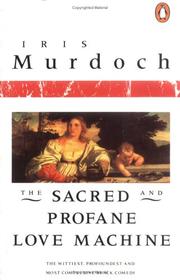
Her awards trajectory reflects the breadth of her achievement across different phases of her career. She won the Costa Book Awards in 1974 for The Sacred and Profane Love Machine, a novel that exemplifies her gift for anatomizing the ways desire and self-interest distort our moral vision. Four years later, she reached the pinnacle of literary recognition with the Booker Prize for The Sea, the Sea, a masterwork of unreliable narration and psychological penetration that many consider her finest work. The novel’s protagonist, a retired theater director isolated in a clifftop house, becomes entangled in obsessive memories and dangerous fantasy—a perfect vehicle for Murdoch’s exploration of how the mind constructs its own mythologies.
Murdoch’s dual recognition by both prizes speaks to her unparalleled stature in British letters. She was a writer equally capable of winning awards and captivating readers, proving that philosophical rigor and narrative enchantment need not be opposed forces in the novel form.