James Blish
James Blish stands as one of science fiction’s most intellectually rigorous voices, a writer who wielded the genre’s speculative possibilities to explore profound questions of faith, morality, and human nature. His work transcends the pulp traditions of mid-century SF, grounding imaginative premises in genuine philosophical inquiry and scientific consideration. Blish’s distinctive approach—combining hard scientific thinking with existential depth—earned him recognition as a major figure in the field’s golden age, when science fiction was still fighting for literary credibility.
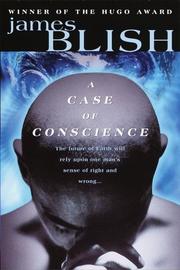
Blish’s award trajectory speaks to the lasting power of his best work. His novella “A Case of Conscience,” first recognized with the Hugo Award for Best Novella in 1954, proved so substantial that it was later expanded and re-awarded the Hugo for Best Novel in 1959, a rare testament to its expanding influence and resonance within the SF community. That same year of initial recognition also brought him the Hugo for Best Novelette for “Earthman, Come Home,” establishing 1954 as a watershed moment for his career. These accolades reflect Blish’s ability to create narratives where speculative elements serve as vehicles for genuine intellectual engagement, whether examining theological dilemmas on alien worlds or humanity’s place in an expanding cosmos.