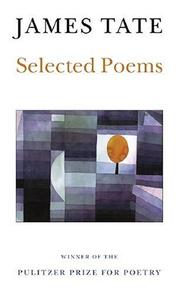
James Tate
James Tate stands as one of contemporary American poetry’s most inventive and emotionally dexterous voices, a writer whose work refuses easy categorization even as it consistently earns major recognition. His 1992 Pulitzer Prize for Selected Poems and his 1994 National Book Award for Worshipful Company of Fletchers underscore his status as a poet of genuine significance—a rare feat of consecutive major honors that testifies to the sustained power and originality of his vision. These accolades recognized not a single masterwork but rather a body of poetry distinguished by its surprising emotional depths, surreal imagery, and an almost conversational directness that belies its considerable technical sophistication.
Tate’s distinctive voice merges the seemingly incompatible: he writes with deadpan humor about the absurdities of existence, yet his poems arrive at moments of genuine pathos and insight. His recurring concerns—the mysteries of ordinary life, the failures and small triumphs of human connection, the strange beauty of the overlooked—animate both his award-winning collections with a kind of tender bewilderment. Whether describing unlikely domestic scenes or tilting into flights of imaginative fancy, Tate’s work demonstrates a poet fully committed to the transformative possibilities of language, one who has spent a career proving that American poetry could be intellectually rigorous, deeply felt, and genuinely surprising all at once.