James Tiptree
James Tiptree Jr. stands as one of science fiction’s most influential and mysterious figures, a writer whose work interrogates the boundaries of identity, gender, and humanity with surgical precision and emotional depth. Publishing under a deliberately ambiguous pseudonym that concealed her true identity as Alice Bradley Sheldon for decades, Tiptree crafted stories that felt simultaneously intimate and cosmic in scope. Her fiction strips away comfortable assumptions about what it means to be human, often exploring the intersection of technology, sexuality, and consciousness with a boldness that was revolutionary for 1970s science fiction. The author’s intellectual rigor and willingness to venture into uncomfortable psychological territory set her apart from her contemporaries and established her as a writer of serious literary ambition.
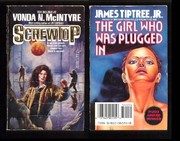
Tiptree’s achievement was recognized early and decisively by the science fiction community. Her novella “The Girl Who Was Plugged In” won the Hugo Award for Best Novella in 1974, a distinction that brought mainstream attention to her distinctive voice and thematic concerns. The story exemplifies Tiptree’s signature approach: a near-future setting that serves as a vehicle for exploring profound questions about agency, exploitation, and the fragility of individual identity in systems designed to commodify human experience. This award-winning work remains a touchstone of feminist science fiction, demonstrating how Tiptree used the genre’s speculative machinery to excavate the hidden costs of progress and technological transformation.