Jane Rogers
Jane Rogers stands as a distinctive voice in contemporary British fiction, equally commanding in speculative and realist territory. Her work consistently interrogates the collision between scientific advancement and human vulnerability, exploring how abstract ideas ripple through intimate lives. Rogers brings a novelist’s psychological precision to philosophical questions, never letting conceptual concerns overshadow the messy, particular truths of her characters’ inner worlds. Her prose is controlled and elegant, favoring clarity over ornament, which makes her most unsettling ideas feel all the more immediate and pressing.
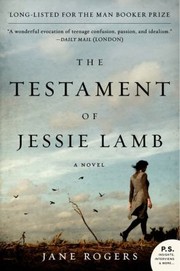
Her 2012 Arthur C. Clarke Award win for The Testament of Jessie Lamb stands as a high-water mark of her engagement with speculative fiction. The novel—narrated by a young woman grappling with a world transformed by environmental collapse—exemplifies Rogers’s gift for marrying genre ambition with literary sophistication. Rather than using science fiction as a vehicle for technological spectacle, she deploys it to examine how ordinary people navigate extraordinary moral dilemmas, and how individual conscience struggles against the weight of systemic crises. The Clarke Award recognition cemented her status not as a writer who dabbles in speculative fiction, but as a serious literary artist whose best work happens to engage with the “what if” that science fiction demands.