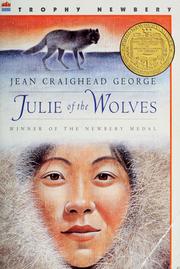
Jean Craighead George
Jean Craighead George stands as one of the most influential voices in children’s literature, a writer whose profound respect for the natural world transformed what it means to tell stories for young readers. Her masterpiece Julie of the Wolves won the Newbery Medal in 1973, a recognition that validated her distinctive approach to adventure storytelling—one that prioritized ecological authenticity and spiritual connection to wilderness over conventional plot mechanics. Through Julie’s journey across the Arctic tundra, George demonstrated that children’s literature could be intellectually rigorous and emotionally complex while remaining utterly gripping, setting a standard that would influence generations of writers working in the genre.
George’s career spanned decades and resulted in more than one hundred books, yet her core preoccupations remained remarkably consistent: the intricate relationships between humans and animals, the fragility of wild spaces, and the resilience of young people who learn to listen to nature rather than dominate it. Her background as a naturalist—she studied at Cornell University and spent her life observing and documenting wildlife—infused her fiction with a credibility that younger readers instinctively recognized and trusted. Whether writing about falcons, wolves, or the interconnected ecosystems of her beloved natural world, George brought a scientist’s eye and a storyteller’s heart to every page, creating narratives that argued, without preaching, for environmental consciousness and humility before the natural order.