Joan D. Vinge
Joan D. Vinge stands among science fiction’s most imaginative worldbuilders, an author whose work consistently bridges hard scientific speculation with deeply human storytelling. Her career has been marked by an exceptional ability to create alien cultures and ecosystems that feel both intellectually rigorous and emotionally resonant, often exploring themes of identity, survival, and connection across the vast distances of space. Vinge’s prose carries a lyrical quality unusual in the genre, lending her speculative scenarios an almost mythic weight that lingers long after the final page.
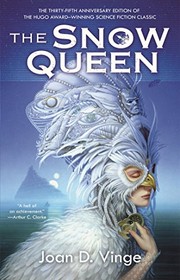
The early recognition of her talents came swiftly and decisively. Her novelette “Eyes of Amber” earned the Hugo Award in 1978, establishing her as a rising voice in the field. But it was The Snow Queen, her ambitious 1980 novel set on a frozen world governed by cycles of astronomical significance, that cemented her reputation as a major science fiction talent. The novel’s success was striking in its breadth—it captured both the 1981 Hugo Award for Best Novel and the Locus Award for Best Science Fiction Novel that same year, a rare double recognition that speaks to its appeal across both fan and critical constituencies. With these early victories, Vinge announced herself as an author capable of sustaining complex narratives across novel length while maintaining the imaginative vigor that had impressed Hugo voters in shorter form.