John Ashbery
John Ashbery stands as one of the most influential and experimentally adventurous American poets of the late twentieth century. His work fundamentally reshaped what contemporary poetry could be—collapsing the boundaries between the quotidian and the sublime, weaving together high and low culture, and embracing a syntax that mirrors the fractured, associative nature of consciousness itself. Ashbery’s distinctive voice treats the reader less as a passive recipient and more as an active collaborator, requiring genuine engagement with his layered, often deliberately disjunctive narratives. His recurring preoccupations with time, memory, selfhood, and the slippery nature of meaning itself have made him a touchstone for generations of poets seeking alternatives to more conventional modes of expression.
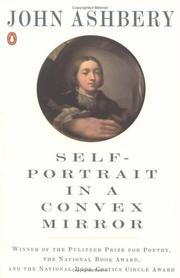
The extraordinary success of Self-Portrait in a Convex Mirror cemented Ashbery’s place in the literary canon. Published in 1975, the collection swept the major poetry prizes of 1975 and 1976, winning the National Book Critics Circle Award, the National Book Award, and the Pulitzer Prize—a rare trifecta that underscored the book’s singular achievement. The title poem, an extended meditation on Parmigianino’s sixteenth-century painting, exemplifies Ashbery’s ability to transform looking itself into a philosophical inquiry, blending ekphrasis with personal reflection in ways that had rarely been attempted in American poetry. That a volume of such demanding, formally innovative work could achieve such widespread critical recognition spoke to both the power of Ashbery’s vision and a significant shift in what the American literary establishment was willing to honor.