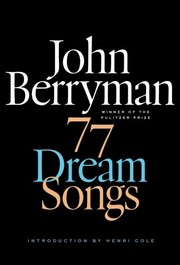
John Berryman
John Berryman stands as one of the most inventive and psychologically penetrating voices in American poetry, a modernist whose work pushed beyond the confessional restraint of his contemporaries into something far more experimental and daringly personal. His masterwork, 77 Dream Songs, which earned the Pulitzer Prize for Poetry in 1965, introduced readers to Henry, a fragmented alter ego who becomes the vehicle for Berryman’s exploration of desire, despair, and the fractured consciousness of mid-century America. Writing in a densely compressed style that combines formal sophistication with deliberate awkwardness—sudden shifts in diction, fractured syntax, and invented words—Berryman created a body of work that resists easy interpretation while remaining deeply moving.
The continued arc of Berryman’s major work demonstrated his commitment to expanding the possibilities of what a poem could be. When he extended the Dream Songs sequence into His Toy, His Dream, His Rest, the collection won the National Book Award for Poetry in 1969, cementing his status as a major voice of his generation. Rather than resting on the considerable achievement of his first volume, Berryman deepened his formal innovations and intensified his psychological investigations, proving that his distinctive approach—urgent, self-interrogating, and formally adventurous—could sustain a work of genuine epic ambition. His twin recognition by America’s most prestigious poetry prizes underscores how his uncompromising vision, though challenging, earned him recognition as a transformative figure in contemporary American letters.