John Crowe Ransom
John Crowe Ransom stands as one of the most intellectually rigorous voices in twentieth-century American poetry, a writer who wielded formal precision like a philosopher’s tool. His work combines the graceful metrics of traditional verse with a searching intelligence that probes human emotion, mortality, and the tension between civilization and nature. Ransom’s influence extended far beyond his own considerable body of verse—as a teacher, critic, and founding editor of The Kenyon Review, he shaped the literary landscape of his era and helped establish the critical frameworks through which generations of readers would understand modern poetry.
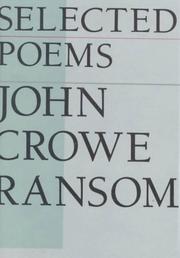
The 1964 National Book Award for Poetry recognized Ransom’s Selected Poems at a moment when his career spanned nearly fifty years of uncompromising artistic vision. By that point, Ransom had already secured his place in literary history as a leading figure of the Fugitive movement and New Criticism, yet the award acknowledged his enduring power as a poet proper—his ability to marry intellectual sophistication with genuine lyric beauty. His poems, often set in the American South and populated by figures both mythic and domestic, explore the ironies of human existence with a tone that ranges from gently ironic to deeply elegiac. Recognition from the National Book Award validated what serious readers had long understood: that Ransom’s carefully wrought verses were not merely vehicles for philosophical ideas, but achievements of art that would survive the critical fashions of their own time.