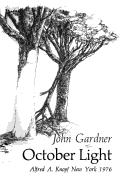
John Gardner
John Gardner stands as one of American literature’s most intellectually ambitious and technically innovative novelists, a writer equally comfortable crafting metaphysical puzzles and exploring the moral complexities of ordinary life. His 1976 National Book Critics Circle Award win for October Light cemented his reputation as a major literary force during a period when American fiction was fragmenting into competing schools and philosophies. Gardner’s work resists easy categorization—he could move from elaborate formal experimentation to deeply humanistic narratives about family conflict and redemption, always grounding his experiments in genuine emotional stakes.
October Light, his award-winning novel set in Vermont, showcases Gardner’s gift for capturing the texture of American provincial life while engaging with larger questions about meaning, mortality, and the possibility of wisdom. The novel’s central conflict between a widowed brother and sister becomes a vehicle for exploring how we construct narratives about ourselves and each other, how stubbornness can masquerade as principle, and how love persists despite our capacity for profound mutual frustration. Gardner’s prose style—precise, often lyrical, animated by genuine curiosity about his characters’ inner lives—makes even his most philosophically ambitious work feel alive on the page.
Throughout his career, Gardner remained committed to the novel as a vehicle for serious moral inquiry, a stance that made him both celebrated and occasionally controversial in an era when such ambitions were sometimes dismissed as outdated.