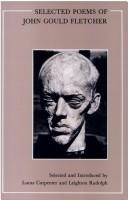
John Gould Fletcher
John Gould Fletcher stands as one of modernism’s most intellectually restless poets, a writer whose career spanned decades of literary experimentation and whose work defied easy categorization. Born in Arkansas but shaped by years abroad, Fletcher became a central figure in the imagist movement before charting his own ambitious course through diverse poetic forms and ambitious thematic territories. His 1939 Pulitzer Prize for Poetry, awarded for Selected Poems, recognized not a single masterwork but rather the cumulative achievement of a poet who had spent a lifetime wrestling with questions of form, nature, and the possibilities of American verse.
What makes Fletcher’s recognition particularly significant is how it vindicated a career of deliberate artistic risk-taking. While some of his contemporaries achieved earlier fame through more conventional means, Fletcher’s Pulitzer came relatively late in his trajectory, honoring the breadth of his experimentation across imagist lyrics, symphonic sequences, and philosophical meditations. His Selected Poems presented readers with a poet unafraid to move between tightly controlled imagistic moments and sweeping, architectural works—a duality that defined his entire artistic vision and cemented his legacy as a modernist who refused to be pinned down by any single aesthetic school.