John Updike
John Updike stands as one of American literature’s most celebrated chroniclers of ordinary life transformed into profound art. Over a prolific career spanning decades, he earned a reputation for his crystalline prose, psychological depth, and ability to find the extraordinary within the mundane textures of American middle-class existence. His meticulous attention to sensory detail and his unflinching examination of desire, mortality, and spiritual yearning established him as a major figure in post-war American letters, and his work has been recognized across multiple prestigious award platforms.
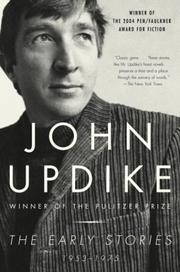
The breadth of Updike’s recognition speaks to his mastery across genres. He achieved remarkable success with his Rabbit series, the multigenerational saga following the life of Harry “Rabbit” Angstrom—winning the National Book Critics Circle Award and Pulitzer Prize for both Rabbit Is Rich (1981-1982) and Rabbit at Rest (1990-1991). These dual victories place him among a rare group of writers honored at literature’s highest echelon for the same work. Beyond fiction, Updike proved equally formidable as a critic, winning the National Book Critics Circle Award for Hugging the Shore: Essays and Criticism in 1983, demonstrating his keen literary judgment and sophisticated aesthetic philosophy. Later in his career, the PEN/Faulkner Award recognized The Early Stories: 1953-1975 in 2004, affirming that his luminous short fiction—often considered some of the finest in the American canon—had lost none of its power to move and illuminate.