Jorie Graham
Jorie Graham has emerged as one of the most intellectually ambitious and formally inventive poets of her generation, consistently pushing language toward philosophical inquiry and emotional precision. Her work engages with modernist complexity while remaining anchored in urgent questions about consciousness, perception, and meaning. Graham’s distinctive style—characterized by long, sinuous lines, nested clauses, and deliberate syntactic disruptions—creates a reading experience that mirrors the mind’s actual processes of thinking and doubting. Her poems move restlessly across landscapes both literal and psychological, treating perception itself as a form of inquiry that can never quite reach stable ground.
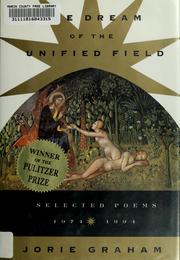
Graham’s 1996 Pulitzer Prize for Poetry, awarded for The Dream of the Unified Field, recognized her as a poet of major significance at a pivotal moment in her career. The collection exemplifies what has become her hallmark approach: the marriage of rigorous philosophical meditation with the lived experience of seeing and being in the world. Her sustained engagement with questions of knowledge, temporality, and the limits of language has influenced a generation of contemporary poets and secured her place in the American literary canon as a writer whose ambitions match the complexity of the historical moment she inhabits.