Joseph J. Ellis
Joseph J. Ellis stands among the preeminent historians of the American founding era, bringing scholarly rigor and narrative verve to stories that feel as immediate as they are consequential. His work eschews the dusty antiquarianism that can plague historical writing, instead treating the founding generation as fully human figures grappling with contradictions, ambitions, and genuine uncertainty about the nation they were creating. Ellis has built a career on excavating the personal and political tensions that shaped early American history, examining not just what happened but why it mattered and what it cost the people involved.
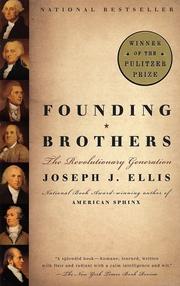
His masterwork, Founding Brothers: The Revolutionary Generation, exemplifies this approach and earned him the Pulitzer Prize for History in 2001. The book moves beyond conventional chronology to explore the crucial relationships—and ruptures—among Washington, Jefferson, Franklin, Hamilton, and Adams, treating their disagreements as philosophical contests with real stakes for the nation’s future. Rather than presenting these figures as marble statues, Ellis depicts them as strategic thinkers navigating moral quandaries, particularly the glaring contradiction between their revolutionary rhetoric and the persistence of slavery. The Pulitzer recognition acknowledged what readers had already recognized: that Ellis had written the kind of history that deepens our understanding while compelling us to keep turning pages, a rare achievement in the field.