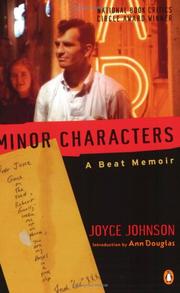
Joyce Johnson
Joyce Johnson stands as a vital chronicler of the Beat Generation, bringing an insider’s perspective and unflinching honesty to a literary movement too often filtered through male voices. Her memoir Minor Characters, published in 1983, captures her experiences as a young writer and editor navigating the vibrant, chaotic world of 1950s New York alongside figures like Jack Kerouac and Allen Ginsberg. What distinguishes Johnson’s account is her refusal to play the supporting role her title suggests—instead, she reclaims her own narrative as a serious artist grappling with love, ambition, and the constraints placed on women in a male-dominated literary scene.
The dual recognition of Minor Characters by the National Book Critics Circle Award in both the Biography and Autobiography categories speaks to Johnson’s remarkable achievement in the form itself. Rather than settling into a single generic box, her work operates simultaneously as personal testimony and cultural history, blending intimate memoir with the larger story of postwar American letters. This cross-category recognition remains rare and reflects how thoroughly Johnson transcends conventional category boundaries. Her prose is both lyrical and precise, combining the poetic sensibility of her fiction with the documentary power of her nonfiction, making her an essential voice for understanding not just the Beats, but the hidden experiences of women who lived through that era.