Kate Seredy
Kate Seredy stands as a vital figure in twentieth-century children’s literature, whose work transcended the boundaries between illustration and storytelling to create immersive literary experiences. A Hungarian-born author and artist, Seredy brought a distinctly European sensibility to American children’s books, infusing her narratives with rich historical texture and deeply humanistic themes. Her dual mastery of image and word allowed her to craft stories that felt both visually alive and narratively substantial—a combination that would define her most celebrated works.
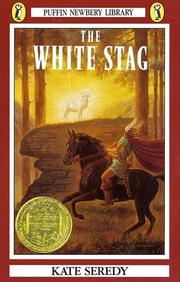
Seredy’s magnum opus, The White Stag, earned her the Newbery Medal in 1938, cementing her reputation as a significant voice in children’s literature. The novel traces the legendary journey of the Hungarian people from ancient Asia to their European homeland, weaving together mythology, history, and adventure into an epic tale told through the eyes of young characters. What distinguished The White Stag among its contemporaries was Seredy’s ability to handle sweeping historical narratives with the intimacy of a personal journey, making grand themes of migration, belonging, and cultural identity resonant for young readers. Her recognition by the Newbery committee reflected a growing appreciation for children’s literature that could be both intellectually ambitious and emotionally engaging—books that respected young readers’ capacity to grapple with complex ideas and distant times.