Kim Stanley Robinson
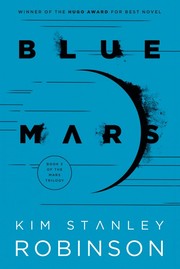
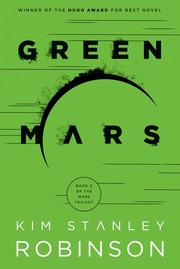
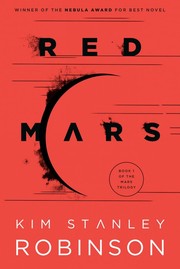
Kim Stanley Robinson has established himself as one of science fiction’s most intellectually ambitious voices, earning recognition across the genre’s most prestigious awards for his sprawling explorations of how humanity might reshape itself across time and space. His breakthrough came early—winning the World Fantasy Award for the novella “Black Air” and Locus Award for his debut novel The Wild Shore—but it was his monumental Mars trilogy that cemented his status as a major literary figure. The three volumes, Red Mars, Green Mars, and Blue Mars, dominated award season in the mid-1990s, earning consecutive Hugo Awards and Locus Awards that demonstrated rare cross-award consensus about their significance. These novels established Robinson’s signature approach: rigorous scientific speculation grounded in political philosophy, where terraforming planets becomes a canvas for exploring human civilization, ecology, and social organization.
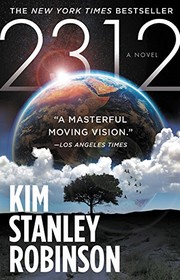
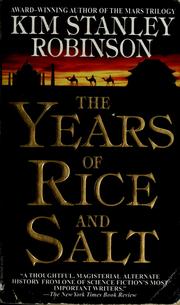
Beyond Mars, Robinson’s commitment to weaving complex ideas into narrative has sustained his career across decades. Works like The Years of Rice and Salt, which imagined a world where the Black Death decimated Europe instead of Asia, and 2312, a far-future novel spanning centuries and solar systems, showcase his fascination with how history might unfold differently and how societies might evolve. His Nebula Award for 2312 alongside earlier recognitions demonstrated that his influence extended well beyond a single landmark series. Robinson’s distinctive style—patient worldbuilding, intricate plotting, and philosophical depth—has made him a writer other science fiction authors point to when discussing the genre’s capacity for serious literary ambition, proving that speculative fiction can be both intellectually rigorous and emotionally resonant.