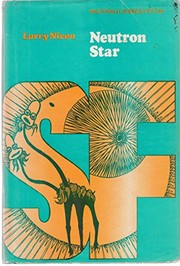
Larry Niven
Larry Niven stands as one of science fiction’s most rigorous world-builders, an author whose work is distinguished by meticulous scientific reasoning and the kind of imaginative extrapolation that makes readers feel like they’re discovering genuine physics rather than fictional invention. His career has been defined by an almost obsessive attention to the consequences of his speculative premises—what happens to civilization when you introduce a particular technology, or how does relativity actually reshape human society? This intellectual approach earned him widespread recognition across the science fiction establishment, beginning with his Hugo Award win for the short story “Neutron Star” in 1967 and continuing through multiple subsequent honors that demonstrate his sustained excellence across different formats.
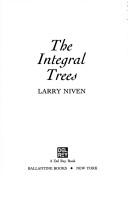
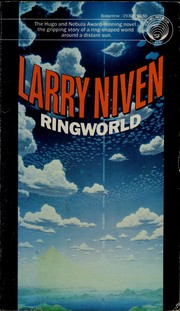
The apex of Niven’s recognition came with Ringworld, the novel that would cement his place in science fiction’s upper echelon. This audacious work, which imagines an artificial megastructure of impossible scale orbiting a star, captured both the Nebula Award for Best Novel in 1970 and the Hugo Award in 1971—a remarkable double that reflects how thoroughly the book captivated both readers and critics. His short fiction proved equally durable, winning Hugo Awards for “Inconstant Moon” and “The Hole Man,” along with a Novelette Hugo for “The Borderland of Sol,” while his later novel The Integral Trees garnered Locus Award recognition. This pattern of awards across multiple categories and decades reveals an author capable of excellence whether crafting intricate stories or vast, conceptually ambitious novels.
-
-
The Borderland of Sol
-
The Hole Man
-
-
-