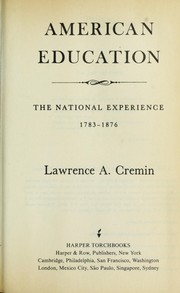
Lawrence A. Cremin
Lawrence A. Cremin stands as one of the most influential educational historians of the twentieth century, fundamentally reshaping how scholars understand the American educational enterprise. His groundbreaking work expanded the definition of education itself, moving beyond the confines of schoolhouse walls to examine the full constellation of institutions, individuals, and cultural forces that shaped American intellectual and moral development. This expansive vision—treating education as a democratic and social phenomenon rather than merely an institutional one—became his signature contribution to historical scholarship and profoundly influenced generations of historians who followed.
Cremin’s magnum opus, American Education: The National Experience, 1783-1876, earned the Pulitzer Prize for History in 1981, cementing his status as an essential figure in understanding how education evolved during America’s formative century. The work exemplifies his distinctive approach: meticulous archival research combined with a sweeping interpretive framework that connected schooling to family life, religious institutions, print culture, and civic participation. Through this lens, Cremin revealed education not as something done to Americans but as something woven into the fabric of their everyday lives and aspirations. His Pulitzer-winning volume became the standard against which educational histories would be measured, a testament to both his scholarly rigor and his ability to make complex historical arguments accessible to educated general readers.