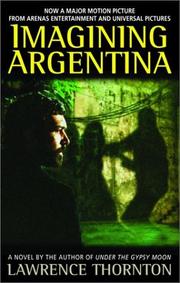
Lawrence Thornton
Lawrence Thornton burst onto the literary scene with Imagining Argentina, a novel that announced the arrival of a major talent unafraid to grapple with historical trauma and the redemptive power of storytelling. The book’s recognition with the 1988 PEN/Hemingway Award for Debut Novel validated what readers discovered in its pages: a writer of uncommon ambition who could weave together the personal and the political into something both lyrical and urgent. Set against the backdrop of Argentina’s “Dirty War,” Thornton’s narrative moves with the fluid grace of someone comfortable shifting between realism and the magical, between the intimate domestic sphere and the broader landscape of collective suffering.
What distinguishes Thornton’s achievement is his conviction that imagination itself can be a form of resistance and healing. In Imagining Argentina, characters confront the disappearances and brutalities of dictatorship not through journalistic documentation alone, but through acts of creative invention that honor the missing and memorialize the lost. This distinctive vision—that fiction has the capacity to restore what violence has taken—marks Thornton as a writer interested in literature’s deepest moral dimensions. His work suggests that in times of historical darkness, the writer’s role extends beyond bearing witness; it becomes an act of imaginative reclamation.