Lois Lenski
Lois Lenski stands as one of the most prolific and beloved children’s authors of the twentieth century, with a career distinguished by her ability to capture the authentic lives of ordinary American families. Her deep commitment to social realism in children’s literature set her apart from many of her contemporaries, who favored fantasy and escapism. Lenski believed that young readers deserved stories that reflected their own experiences and communities, and she traveled extensively across the United States to research the regional cultures and economic realities of the families she depicted in her books.
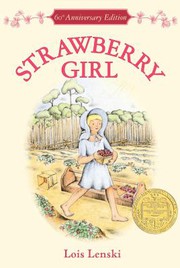
Her masterwork Strawberry Girl, which earned the 1946 Newbery Medal, exemplifies her signature approach: a vivid portrait of a family’s agricultural struggles in Florida during the Great Depression, told with warmth and respect for her characters’ resilience. The novel introduced generations of young readers to the complexities of rural American life while maintaining the emotional immediacy and accessibility that made Lenski’s work so widely embraced. Beyond this pinnacle of recognition, her prolific output—more than ninety books across her lifetime—demonstrated an unrelenting dedication to documenting diverse American experiences, from coal mining communities to Native American reservations.
Lenski’s influence on children’s literature extends beyond her numerous published works; she fundamentally shaped how educators and publishers understood the potential of realistic fiction to validate children’s lives and broaden their understanding of others. Her insistence on authentic detail and genuine human emotion, combined with her elegant prose and distinctive illustrations, created a body of work that continues to resonate with readers and remains essential to discussions of American children’s literature.