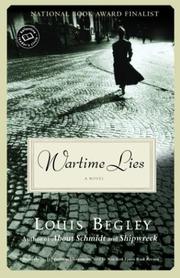
Louis Begley
Louis Begley emerged onto the literary scene with a voice both intimate and historically urgent. His debut novel Wartime Lies captured readers and critics alike with its unflinching examination of survival, moral compromise, and the psychological weight of deception during the Holocaust. The novel’s achievement was immediately recognized when it won the 1992 PEN/Hemingway Award, an honor that typically signals not just a promising debut, but a fully formed literary talent. Begley’s ability to render the interior landscape of a child narrator navigating impossible circumstances—sheltered by lies meant to save him—established him as a writer capable of tackling the era’s most fraught moral questions without sentimentality or easy answers.
What distinguishes Begley’s work is his unflinching exploration of identity, belonging, and the scars left by historical trauma. Drawing on his own background as a Polish-Jewish refugee who survived the war years, he brings an authenticity to questions of displacement and cultural memory that resonate far beyond the historical moment. His prose is precise and elegant, favoring psychological depth over narrative spectacle, and he consistently demonstrates that the most harrowing human experiences are often best understood through careful attention to thought, feeling, and the small acts of resistance or complicity that define us. Wartime Lies remains a cornerstone of Holocaust literature, a work that secured Begley’s place among contemporary writers whose moral seriousness and literary craftsmanship earn them enduring critical regard.