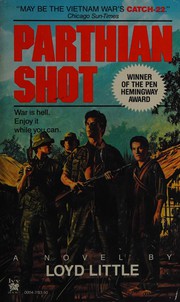
Loyd Little
Loyd Little emerged onto the American literary scene with a debut that announced the arrival of a major talent. His novel Parthian Shot, published in 1976, earned him the prestigious PEN/Hemingway Award, a distinction reserved for the most promising first works of fiction. The award itself carries the weight of literary tradition—it’s the kind of recognition that signals not just technical proficiency but genuine artistic vision. Little’s ability to command attention with his inaugural work placed him among a distinguished lineage of debut authors whose early promise suggested careers of considerable consequence.
What distinguishes Little’s writing is his command of narrative tension and psychological depth, qualities evident from the very pages of Parthian Shot. The novel demonstrates a writer unafraid to explore complex human motivations and moral ambiguity, themes that would come to define much of the serious fiction of his era. Little’s prose carries a deliberate precision, each sentence earning its place in service of a larger architectural design—the kind of craftsmanship that prize committees recognize and that sustains literary reputations across decades.
The PEN/Hemingway Award victory in that critical mid-1970s moment helped establish Little as a writer worth following, one whose work engaged with the significant questions animating American fiction during a period of cultural reckoning and artistic renewal.