Lucille Clifton
Lucille Clifton stands as one of the most distinctive voices in American poetry, a writer who distilled profound spiritual and social truths into deceptively simple language that struck like lightning. Her characteristic spare style—short lines, minimal punctuation, and an almost conversational directness—concealed layers of complexity, allowing her to address race, gender, family, and faith with an intimacy that made the personal feel universally resonant. Over a career spanning several decades, Clifton cultivated a loyal readership among those who recognized that her apparent plainness was actually a hard-won artistry, a refusal of ornament in service of clarity and power.
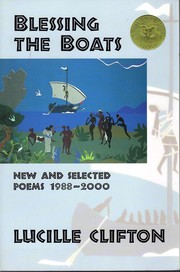
The publication of Blessing the Boats: New and Selected Poems 1988–2000 brought Clifton’s life work significant institutional recognition when the collection won the National Book Award for Poetry in 2000, cementing her status as a major American poet. The award acknowledged not just the strength of individual poems but the arc of a career dedicated to bearing witness—to family history, to African American experience, to the body and its vulnerabilities, to moments of grace found in everyday struggle. By that point, Clifton had already influenced generations of poets through her teaching and her prolific output, but the National Book Award affirmed what her most attentive readers had long understood: that this quiet, powerful voice deserved to be heard at literature’s highest levels.