M. John Harrison
M. John Harrison is a virtuoso of speculative fiction whose work consistently defies easy categorization, blending the architectures of science fiction with literary sophistication and philosophical depth. Over a career spanning decades, Harrison has carved out a distinctive space in genre fiction through his willingness to interrogate and dismantle the conventions that define it. His prose is characteristically dense and evocative, layering metafictional awareness with genuine emotional resonance, while his narratives often collapse the boundaries between the mundane and the extraordinary. Readers drawn to his work tend to be those who relish ambiguity, linguistic precision, and the kind of speculative thinking that uses impossible worlds to probe urgent questions about meaning, identity, and desire.
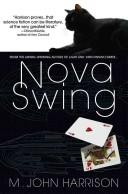
Harrison’s 2007 Arthur C. Clarke Award for Nova Swing stands as testament to the broader recognition his work has achieved. The novel exemplifies his mature style—a hallucinatory, non-linear exploration of a transformed Earth and the strange zone of probability that bleeds into it—and the Clarke Award’s selection of Nova Swing acknowledged what devoted readers had long understood: that Harrison represents science fiction at its most ambitious and uncompromising. The novel’s dense weave of linguistic innovation, philosophical inquiry, and narrative experimentation offered the Award voters a version of the genre uninterested in reassuring certainties, positioning Harrison among the most significant voices in contemporary speculative literature.