M. John Harrison
M. John Harrison stands as one of contemporary literature’s most restlessly inventive voices, a writer whose work consistently defies easy categorization while maintaining an almost austere formal precision. Over a career spanning decades, Harrison has become known for his willingness to interrogate genre conventions from within, crafting narratives that shimmer with philosophical depth and linguistic sophistication. His recent Booker Prize win for The End of Everything represents a watershed moment for a writer long recognized by the science fiction community but now claiming recognition across the broader literary landscape.
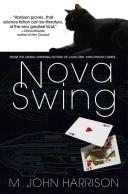
Harrison’s approach to storytelling has always privileged ambiguity and fragmentation over conventional narrative resolution. His 2007 Arthur C. Clarke Award for Nova Swing demonstrated his command of speculative fiction’s most expansive possibilities—a novel that treats space opera’s familiar furniture with genuine imaginative stakes. Yet what unites his prize-winning works is an underlying skepticism about certainty itself: whether exploring the metaphysical vertigo of deep space or the intimate mysteries of human connection, Harrison’s prose maintains a cool, almost detached precision that somehow deepens emotional resonance rather than diminishing it. His dual recognition by both the science fiction establishment and the Booker Prize judges speaks to a rare achievement—a body of work that genuinely enriches multiple reading communities without compromising its uncompromising vision.