Madeleine L'Engle
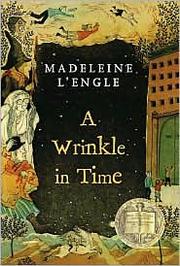
Madeleine L’Engle stands as one of the most influential voices in children’s and young adult literature, a writer who refused to condescend to her audience or simplify the big ideas that fascinated her. Her groundbreaking novel A Wrinkle in Time, which earned the Newbery Medal in 1963, introduced generations of young readers to a cosmos where science, spirituality, and adventure intertwine—and where a girl with frizzy hair and an unconventional family could be the hero. The novel’s bold narrative style, philosophical depth, and matter-of-fact treatment of dimensions beyond our own challenged what children’s literature could be, proving that young readers possessed the imagination and intellect to grapple with complex concepts about good and evil, individuality, and the nature of reality itself.
Beyond A Wrinkle in Time, L’Engle’s expansive body of work demonstrated her commitment to honoring the inner lives of her characters and readers alike. She wove together her interests in theology, mythology, science, and family dynamics across numerous novels that extended her fictional universe and deepened her exploration of themes central to the human experience. Her refusal to be confined by genre boundaries—whether writing fantasy, realistic fiction, or science-inflected narratives—made her a trailblazer during an era when children’s literature was often more strictly categorized. L’Engle’s legacy rests not merely on her Newbery recognition, but on her revolutionary vision of what stories for young people could accomplish.