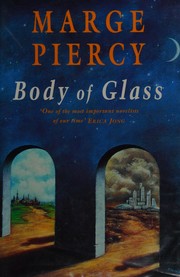
Marge Piercy
Marge Piercy stands as one of American literature’s most intellectually fearless voices, a writer whose work consistently refuses easy categorization. Over a career spanning decades, she has moved fluidly between science fiction, literary fiction, and poetry, always anchoring her narratives in urgent social questions about power, identity, and human connection. Her 1993 Arthur C. Clarke Award-winning novel Body of Glass exemplifies her genre-bending ambitions, weaving science fiction’s speculative machinery with the philosophical depth and character complexity readers associate with her literary fiction. The novel, also published as He, She and It, demonstrates Piercy’s particular gift for imagining technological futures that illuminate present inequalities rather than escape them.
What makes Piercy’s recognition across literary landscapes particularly significant is her refusal to be confined by the expectations of any single genre. She brings the formal rigor and thematic sophistication of literary fiction to science fiction, while her poetry maintains the urgency and accessibility of activist literature. Her recurring preoccupations—the costs of ambition, the politics of desire, the possibilities of community—emerge with different intensities depending on the genre in which she’s working, yet remain unmistakably hers. Body of Glass proved that she could claim science fiction’s highest honors not by abandoning her core concerns but by finding in speculative fiction the perfect vehicle for exploring them, creating a work that satisfies both the genre’s rigorous fans and readers drawn to her uncompromising moral vision.