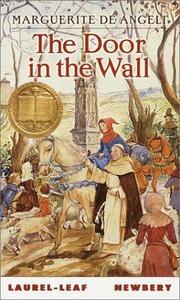
Marguerite de Angeli
Marguerite de Angeli stands as one of the most influential figures in twentieth-century children’s literature, creating stories that celebrate the resilience of young people facing genuine hardship with grace and imagination. Her distinctive approach combined lyrical storytelling with her own exquisite illustrations, making her books visual experiences as much as narrative ones. De Angeli’s work consistently centered the inner lives of children navigating worlds far different from her own—whether set in medieval England or immigrant communities of her adopted Philadelphia—demonstrating a rare empathy and cultural attentiveness for her era.
Her masterpiece, The Door in the Wall, earned the prestigious Newbery Medal in 1950, a recognition that validated her particular gift for transforming historical settings into intimate human dramas. The novel follows a young boy named Robin who finds purpose and belonging despite his physical disability in the tumultuous fourteenth century, embodying the quiet heroism that defined de Angeli’s artistic vision. This award cemented her position as not merely an illustrator of children’s books but a serious literary voice whose stories could speak across generations, her carefully rendered illustrations and deeply felt narratives working in perfect concert to create something wholly her own.