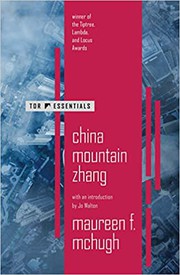
Maureen F. McHugh
Maureen F. McHugh has established herself as one of science fiction’s most intellectually adventurous voices, crafting stories that blend intimate human drama with expansive worldbuilding. Her debut novel China Mountain Zhang announced her arrival with considerable force, earning the 1993 Locus Award for Best First Novel and immediately signaling that readers were in the hands of a writer unafraid to interrogate gender, class, and cultural identity within speculative futures. The novel’s success proved no anomaly—McHugh’s short fiction would go on to demonstrate the same restless intelligence and emotional depth, culminating in her winning the 1996 Hugo Award for Best Short Story with “The Lincoln Train,” a deceptively quiet tale that uses alternate history to probe questions of complicity and resistance.
What distinguishes McHugh across her award-winning work is her refusal to let speculative premises overshadow character. Her futures feel lived-in and morally ambiguous, populated by ordinary people navigating extraordinary circumstances. Whether exploring the lives of Chinese-American engineers in a transformed world or examining the choices we make in the face of historical trauma, she grounds big ideas in the texture of individual experience. Her cross-award recognition—spanning both the genre’s most prestigious accolades—reflects a rare ability to satisfy both the science fiction community’s hunger for conceptual rigor and readers’ deeper need for stories that resonate at the level of the human heart.
-
The Lincoln Train
-