Meyer Schapiro
Meyer Schapiro stands as one of the most influential art historians of the twentieth century, a scholar whose rigorous yet eloquent approach to understanding visual culture fundamentally shaped how we interpret art’s relationship to society, politics, and history. His career spanned decades of groundbreaking work at Columbia University, where he earned a reputation for synthesizing aesthetic analysis with cultural context—a methodology that was revolutionary during his most productive years. Schapiro’s writing combined meticulous formal analysis with broader humanistic concerns, making complex artistic traditions accessible without sacrificing intellectual depth.
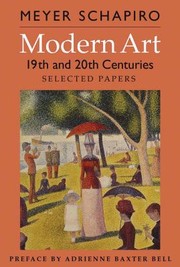
His 1978 National Book Critics Circle Award for Criticism recognized Modern Art: 19th and 20th Centuries (Selected Papers, Volume 2), a collection that exemplifies his distinctive voice and scope. The award validated what his peers already knew: that Schapiro’s essays on impressionism, abstract art, and modernist movements represented essential contributions to art historical scholarship. Rather than treating artworks as isolated aesthetic objects, Schapiro consistently demonstrated how artistic innovation emerges from and responds to the cultural circumstances of its time, a perspective that made him essential reading for scholars across multiple disciplines. His influence extended well beyond academic circles, shaping how educated readers everywhere approach the visual world.