Neil Sheehan
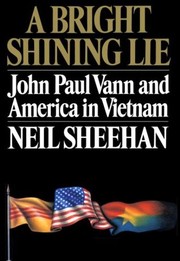
Neil Sheehan stands as one of America’s most consequential reporters and narrative historians, a journalist who transformed firsthand war reporting into sweeping historical analysis. His magnum opus, A Bright Shining Lie: John Paul Vann and America in Vietnam, earned the Pulitzer Prize for General Nonfiction in 1989, cementing a career devoted to excavating uncomfortable truths about American military ambition and Cold War policy. The book’s centerpiece—a portrait of Lieutenant Colonel John Paul Vann, the unconventional Army officer whose rise and disillusionment mirror the war itself—demonstrates Sheehan’s gift for biographical storytelling as a vehicle for larger historical reckoning.
What distinguishes Sheehan’s work is his refusal to accept official narratives. Drawing on decades spent covering Vietnam as a correspondent for UPI and The New York Times, he possessed the credibility and access to interview the architects and participants of the war directly, transforming his reporting into a meticulously researched book that reads with the narrative propulsion of a novel. A Bright Shining Lie doesn’t simply chronicle America’s Southeast Asian misadventure; it dissects the hubris, self-deception, and institutional failure that sustained it. Sheehan’s Pulitzer-winning achievement remains essential reading for understanding how the American establishment conducted—and eventually abandoned—one of the twentieth century’s most consequential foreign policy disasters.