Norman Maclean
Norman Maclean stands as one of American literature’s most compelling voices, a writer who bridged the worlds of academia and storytelling with uncommon grace. A career professor of English at the University of Chicago, Maclean didn’t publish his first book until he was in his seventies, yet his work immediately demonstrated a mastery of narrative that seemed to emerge fully formed from decades of careful observation and thought. His distinctive style marries precise, almost elegant prose with an unflinching examination of human nature, mortality, and our relationship to the wild landscapes that shape us.
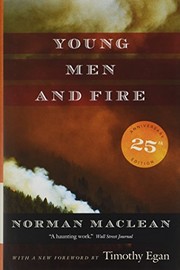
Maclean’s most celebrated work, Young Men and Fire, won the National Book Critics Circle Award for Nonfiction in 1992, cementing his legacy as a writer of extraordinary depth and integrity. The book reconstructs the Mann Gulch fire of 1949, in which thirteen smokejumpers perished, transforming what could have been a straightforward tragedy into a profound meditation on fate, courage, and the hidden complexities of catastrophe. Through meticulous research and lyrical prose, Maclean resurrects not just the facts of that fateful day, but the inner lives of the men involved, asking fundamental questions about how we understand loss and what it means to bear witness to human vulnerability.
What makes Maclean’s achievement particularly striking is how he demonstrates that a life devoted to teaching and scholarship need not preclude literary brilliance—indeed, his intellectual rigor and philosophical depth are inseparable from his power as a writer. His work endures because it refuses easy answers, instead inviting readers into the complex terrain where history, memory, and meaning converge.