Orson Scott Card
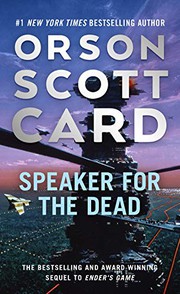
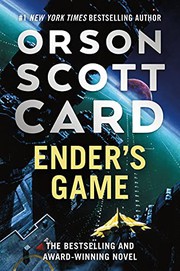
Orson Scott Card stands as one of speculative fiction’s most decorated architects, a writer whose ability to span genres—from hard science fiction to historical fantasy—has earned him an extraordinary range of critical accolades. His breakthrough novel Ender’s Game achieved the rare distinction of winning both the Nebula Award and Hugo Award for Best Novel in consecutive years (1985-1986), establishing Card as a major voice in science fiction while its themes of childhood, warfare, and moral ambiguity continue to resonate with readers across generations. That early success was no fluke; Card immediately demonstrated his versatility by winning back-to-back Hugo and Nebula Awards for Speaker for the Dead, proving his ability to deepen and expand a fictional universe with philosophical sophistication.
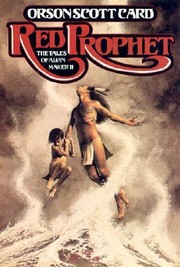
Beyond the space-faring realms of his Ender universe, Card has cultivated a rich alternate American history through his Alvin Journeyman series, a body of work that blends folklore, historical speculation, and fantasy into something uniquely American in its sensibility. This series—beginning with Seventh Son and continuing through Red Prophet, Prentice Alvin, and Alvin Journeyman—showcases Card’s gift for weaving magic into historical texture, earning him multiple Locus Awards across the late 1980s and 1990s. Whether crafting intimate character studies in futuristic settings or reimagining frontier America through a lens of wonder, Card’s recurring preoccupations with power structures, individual agency, and the collision between the personal and the political have made him essential reading for anyone seeking to understand how speculative fiction shapes our understanding of both technology and humanity.