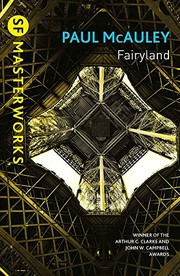
Paul J. McAuley
Paul J. McAuley represents a particular strain of hard science fiction that privileges vivid worldbuilding and philosophical complexity over conventional narrative shortcuts. His work often grapples with the implications of biotechnology, artificial intelligence, and human transformation, exploring these themes through narratives set in richly imagined futures where scientific advancement reshapes not just society but consciousness itself. McAuley’s prose tends toward the lyrical and precise, grounding speculative concepts in sensory detail that makes the alien feel immediate and credible.
His 1996 novel Fairyland earned the Arthur C. Clarke Award, cementing his reputation as one of science fiction’s most intellectually ambitious voices. The novel’s exploration of near-future technology, virtual reality, and the blurred boundaries between human and artificial intelligence resonated with the Clarke Award’s judging panel, which has long championed works that engage seriously with scientific ideas while maintaining literary sophistication. McAuley’s recognition on the awards circuit reflects a broader appreciation for his ability to marry conceptual rigor with emotionally resonant storytelling, establishing him as a writer equally invested in the texture of human experience and the architecture of imagined worlds.