Philip Gourevitch
Philip Gourevitch stands among the most consequential journalists and nonfiction writers of our time, having dedicated much of his career to bearing witness to atrocities and their aftermath. His work combines meticulous reporting with deeply humane prose, creating narratives that refuse to look away from uncomfortable truths while remaining fiercely readable. Gourevitch’s distinctive approach treats historical trauma not as abstraction but as lived experience, centering the voices and perspectives of those who survived unimaginable violence.
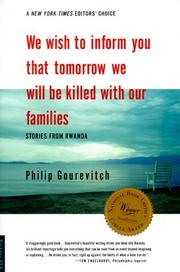
His landmark work, We Wish to Inform You That Tomorrow We Will Be Killed With Our Families, emerged from years spent documenting the Rwandan genocide and its reverberations across survivors, perpetrators, and entire communities. The title—drawn from actual words spoken during the genocide—sets the tone for a work of devastating clarity that transforms journalism into something approaching moral reckoning. The book’s recognition with the 1998 National Book Critics Circle Award for Nonfiction acknowledged not just its historical importance but its artistic power: Gourevitch had succeeded in making readers confront one of the twentieth century’s greatest horrors with both unflinching detail and profound empathy.
Throughout his career at publications like The New Yorker, where he has served as a staff writer, Gourevitch has maintained this commitment to rigorous investigation paired with literary ambition. His willingness to spend years on a single story, to return repeatedly to difficult subjects, and to interrogate his own role as observer has established him as a model for engaged nonfiction writing in an era when depth reporting is increasingly rare.