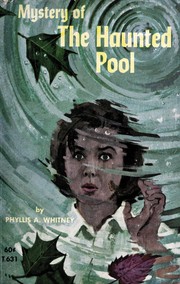
Phyllis A. Whitney
Phyllis A. Whitney carved out a distinctive niche in American literature as a master of the juvenile mystery, crafting stories that captivated young readers while earning the respect of the literary establishment. Her gift lay in constructing intricate plots that treated children as intelligent participants in their own detective work, weaving together atmospheric settings, compelling characters, and genuine puzzles that didn’t condescend to her audience. Whitney’s ability to sustain suspense across a full narrative while maintaining accessibility made her a dominant figure in the genre during the mid-twentieth century.
Her recognition by the Edgar Awards—the mystery field’s most prestigious honor—underscores her outsized influence on young adult literature. Her 1961 Edgar win for The Mystery of the Haunted Pool announced her as a serious voice in the genre, while her 1964 Edgar win for Mystery of the Hidden Hand proved that recognition was no fluke. The back-to-back awards, separated by genuine literary achievement rather than publisher momentum, marked Whitney as a writer whose work transcended the commercial categories it inhabited. These Edgar victories positioned her among the finest mystery writers of her era, regardless of audience age, and established a template for how young readers’ literature could achieve both critical acclaim and genuine literary merit.