Poul Anderson
Poul Anderson stands as one of science fiction’s most versatile and prolific voices, a writer whose career spanned decades while consistently exploring the intersection of hard science, philosophical depth, and human drama. His work ranged across space opera, time travel paradoxes, and intimate character studies, yet regardless of subgenre, Anderson brought a distinctive blend of rigorous scientific speculation and emotional complexity that elevated genre conventions. His recurring preoccupations—the burden of knowledge, the ethics of technological advancement, and the resilience of human connection across vast distances—gave his fiction a thematic coherence that transcended the pulp origins of science fiction.
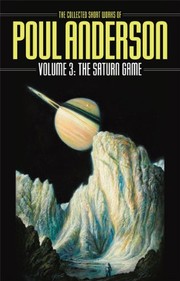
Anderson’s achievement across the field’s most prestigious awards testifies to his sustained excellence. He claimed the Hugo Award five times for novelette and novella work, beginning with “The Sharing of Flesh” in 1969 and continuing through “Hunter’s Moon” in 1979 and “The Saturn Game” in 1982. His Nebula Award recognition proved equally impressive, with four wins including the pair of 1971 and 1972 victories for “The Queen of Air and Darkness,” a story that demonstrated his ability to blend mythic resonance with speculative boldness. The fact that several of his works won both the Hugo and Nebula—most notably “The Queen of Air and Darkness” and “The Saturn Game”—underscores how his fiction satisfied both the fan-voted enthusiasm of the Hugo electorate and the professional appreciation of the Nebula judges, a rare consensus that speaks to the depth and durability of his imaginative vision.
-
-
-
Hunter’s Moon
-
-

-
-