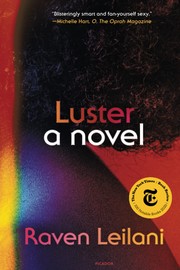
Raven Leilani
Raven Leilani arrived on the literary scene with a debut that announced the presence of a major new voice. Her novel Luster captured something urgent and unsettling about contemporary desire, identity, and the search for belonging in a fragmented world. The book’s unflinching exploration of a Black woman navigating art, sexuality, and precarious relationships set it apart from typical debut fiction, earning it the 2020 Kirkus Prize for Fiction. With Luster, Leilani proved herself a writer uninterested in easy resolutions or comfortable narratives, instead crafting prose that is by turns lyrical and brutally honest.
What distinguishes Leilani’s work is her refusal to sentimentalize her characters or their circumstances. Her sentences carry a distinctive precision—sometimes austere, sometimes lush—that mirrors the psychological complexity of her protagonists. She writes about power dynamics, institutional racism, and intimate relationships with an anthropological eye, treating the mundane and the sensational with equal gravity. There’s a cinematic quality to her storytelling, a sense that she’s observing her characters from a slight distance even as we’re drawn into their inner lives.
Since the critical success of Luster, Leilani has become a fixture in conversations about contemporary American fiction and the evolving landscape of Black literary voices. Her work continues to influence emerging writers and readers eager for fiction that challenges rather than comforts.