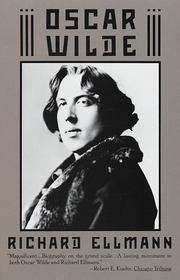
Richard Ellmann
Richard Ellmann stands as one of the most influential literary biographers of the twentieth century, a scholar whose meticulous research and elegant prose transformed biography into an art form. His magnum opus, Oscar Wilde, became a landmark achievement in the genre—so definitive and beautifully rendered that it earned both the National Book Critics Circle Award for Biography and Autobiography in 1988, followed by the Pulitzer Prize for Biography the following year. This extraordinary triple recognition speaks to Ellmann’s rare ability to move seamlessly between rigorous historical documentation and literary grace, creating a biography that reads as compulsively as fiction while maintaining uncompromising scholarly standards.
Ellmann’s distinctive approach to literary biography involved immersive research into the lives of modernist giants, with Wilde and James Joyce becoming the subjects of his most celebrated work. He possessed an uncanny ability to illuminate the relationship between an author’s life and art, showing how personal struggles, loves, and contradictions fueled creative genius. His sympathetic yet unflinching portrait of Wilde—exploring the writer’s wit, sexuality, artistic vision, and tragic downfall—set a new standard for biographical honesty in literary studies. The convergence of critical acclaim across multiple award categories underscored what readers and judges alike recognized: that Ellmann had produced not merely the definitive life of Wilde, but a work that redefined what biography could achieve.