Richard Wilbur
Richard Wilbur stands as one of the most accomplished and technically masterful poets of the late twentieth century, a writer who proved that formal verse could be both intellectually rigorous and genuinely moving. His work is characterized by crystalline imagery, playful wordplay, and a philosophical depth that emerges quietly from observations of everyday objects and moments. Wilbur’s verses reveal how the mundane world—a beautiful thing rendered in careful metaphor—can become a gateway to larger truths about existence, mortality, and human connection. His distinctive voice earned him the kind of cross-generational recognition that few poets achieve: he won both the National Book Award and Pulitzer Prize for Things of This World in 1957, establishing himself as a major literary figure while still in his mid-thirties.
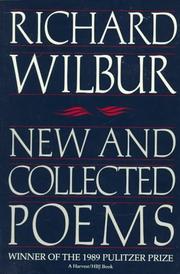
Over a career spanning seven decades, Wilbur continued to evolve as a poet and translator while maintaining the exacting standards that defined his early work. His later collection New and Collected Poems earned him a second Pulitzer Prize in 1989, a testament to his enduring artistic vitality and the sustained excellence of his craft. What makes Wilbur’s multiple award recognition particularly significant is that it reflects not nostalgia for his earlier achievements but genuine appreciation for work that remained surprising and vital throughout his life. Whether writing original poetry or translating the French classics with scholarly precision, Wilbur demonstrated an unwavering commitment to the belief that beauty and truth could coexist in carefully chosen words.