Robert Lowell
Robert Lowell stands as one of the most influential American poets of the twentieth century, a figure whose work fundamentally reshaped what poetry could accomplish and confess. Born into Boston Brahmin privilege, Lowell channeled his own psychological turbulence and moral anguish into verse that refused polite distance from lived experience. His signature achievement was pioneering “confessional poetry”—a mode that brought the private traumas of mental illness, family dysfunction, and marital breakdown directly onto the page with unflinching honesty. Yet Lowell’s significance extends far beyond emotional disclosure; his formal mastery, his wrestling with American history and Cold War anxiety, and his evolution across decades mark him as an essential voice whose concerns remain urgently contemporary.
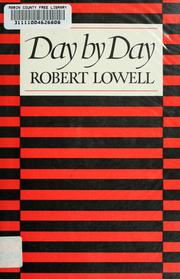
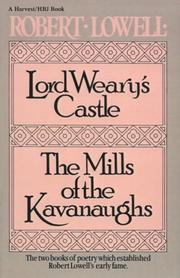
Lowell’s awards record reflects the sustained recognition his work commanded across his career. His debut collection Lord Weary’s Castle won the Pulitzer Prize for Poetry in 1947, establishing him as a major talent while still in his early thirties. The groundbreaking Life Studies, published in 1959, earned the National Book Award in 1960 and cemented his role in liberating American poetry from formalist restraint. He would return to the Pulitzer Prize one final time in 1974 for The Dolphin, a sonnet sequence that documented his personal upheaval with devastating artistry. His final collection, Day by Day, garnered the National Book Critics Circle Award in 1977, just three years before his death, proving that his restless innovation never stalled.
What distinguishes Lowell’s multi-award recognition is how it traces the evolution of American literary taste itself—from formalist rigor to confessional rawness to modernist complexity. His work became the bridge between the high modernism of T.S. Eliot and the more democratic, psychologically probing poetry that would dominate the late twentieth century.