Robert Penn Warren
Robert Penn Warren stands as one of American literature’s most formidable figures, a writer whose influence spans poetry, fiction, and criticism with nearly unmatched versatility. Born in Kentucky, Warren drew deeply from the American South’s moral complexities, crafting narratives that probe power, guilt, and redemption with philosophical rigor. His magnum opus, All the King’s Men, won the Pulitzer Prize for Novel in 1947 and remains a cornerstone of American letters, its protagonist Willie Stark a haunting exploration of political corruption and the corrosion of ideals. The novel’s enduring resonance speaks to Warren’s rare gift for embedding urgent moral questions within gripping human drama.
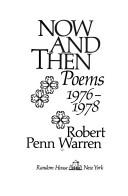
Yet Warren’s genius extended far beyond fiction. His later career witnessed a remarkable renaissance in poetry, where he crafted work of increasing philosophical depth and lyrical power. The collection Promises: Poems, 1954–1956 earned him both the National Book Award and the Pulitzer Prize for Poetry in 1958—a dual recognition that underscores his cross-disciplinary mastery. Decades later, in 1979, Warren claimed another Pulitzer for Poetry with Now and Then, cementing his status as a poet of first rank. Few American writers have commanded such sustained excellence across multiple genres and generations, making Warren not merely a celebrated novelist but an essential American voice grappling with the nation’s deepest questions of conscience and identity.