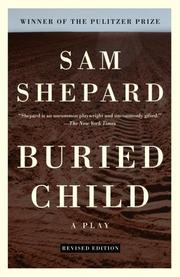
Sam Shepard
Sam Shepard stands as one of American theater’s most iconoclastic voices, a playwright whose work has consistently shattered the boundaries between realism and dreamlike surrealism. His 1979 Pulitzer Prize for Drama, awarded for Buried Child, crystallized what critics and audiences had long recognized: that Shepard possessed an unparalleled ability to excavate the dark mythologies lurking beneath the surface of American family life. The play itself became a landmark of contemporary drama, revealing how violence, secrets, and twisted genealogies can fester in the most ordinary domestic settings, all rendered in Shepard’s distinctive language—a blend of naturalistic dialogue, symbolic imagery, and theatrical experimentation.
Beyond the accolades, Shepard’s significance lies in his refusal to write the same play twice. His recurring preoccupations—the American West as both landscape and state of mind, masculine identity in crisis, the dissolution of the American family, and the collision between myth and reality—recur throughout his prolific body of work, yet each play finds new formal territory. Whether exploring the claustrophobia of a motel room or the vast emptiness of desert mythology, Shepard writes with a poet’s ear for language and a rock musician’s sense of rhythm and tension. His cross-disciplinary career, spanning theater, film acting, and music, has only deepened his unique vision: a playwright who sees drama not as a mirror held up to life, but as a kind of violent, necessary excavation into the American psyche.