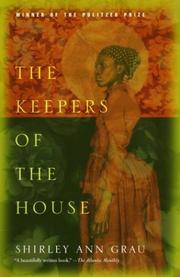
Shirley Ann Grau
Shirley Ann Grau stands as one of the most accomplished yet often understated voices in American literature, a writer whose unflinching examination of race, family, and regional identity carved out new territory in postwar fiction. Her 1965 Pulitzer Prize for Fiction, awarded for The Keepers of the House, cemented her status as a major literary talent at a moment when the American South was undergoing seismic cultural and social change. The novel’s exploration of a biracial family’s hidden history and the violence that erupts when their secret is exposed demonstrated Grau’s remarkable ability to interrogate deeply personal domestic dramas as windows into larger historical reckoning.
Throughout her career, Grau has consistently drawn readers into the complex inner lives of her characters—often women navigating the constraints and contradictions of Southern society. Her prose style, marked by psychological acuity and emotional restraint, allows her to reveal character through gesture and silence as much as through direct statement. With The Keepers of the House, she produced a work that felt both intensely local in its attention to Southern particularity and universally resonant in its moral questions about complicity, inheritance, and the price of maintaining comfortable fictions in the face of historical truth.