Taylor Branch
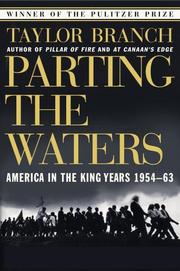
Taylor Branch stands as one of America’s most ambitious narrative historians, having spent decades constructing an unparalleled chronicle of the Civil Rights movement through meticulous research and compelling prose. His magnum opus, Parting the Waters: America in the King Years, 1954–63, established him as a major voice in historical nonfiction when it captured both the 1988 National Book Critics Circle Award for Nonfiction and the 1989 Pulitzer Prize for History. The rare dual recognition reflects not just the book’s scholarly rigor, but Branch’s ability to make the intimate personal dramas and strategic complexities of the movement viscerally immediate to readers.
What distinguishes Branch’s work is his refusal to treat history as inevitable. Rather than presenting the Civil Rights era as a straight path toward progress, he renders it as a series of contingent moments where courage, miscalculation, and circumstance collided to reshape the nation. Parting the Waters opened what would become a trilogy examining Martin Luther King Jr.’s life and times, but Branch’s influence extends beyond his singular achievement—his approach to integrating biographical depth with social history has influenced how subsequent writers grapple with America’s most fraught historical questions. His work demonstrates that epic historical narrative, when pursued with both intellectual rigor and narrative flair, can command the highest honors the literary world offers.