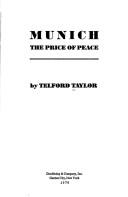
Telford Taylor
Telford Taylor stands as one of the most significant historical voices of the twentieth century, bringing the rigor of legal analysis and firsthand witness testimony to some of humanity’s most consequential moments. A prosecutor at the Nuremberg trials who witnessed the accountability of Nazi leadership, Taylor channeled his experience into a body of work that examines how political choices shape the course of history. His writing is characterized by meticulous research, moral clarity, and an ability to make complex historical events accessible without sacrificing intellectual depth—qualities that earned him the 1979 National Book Critics Circle Award for Nonfiction for his work Munich: The Price of Peace.
In Munich, Taylor dissects the infamous 1938 agreement that many view as the ultimate failure of appeasement, presenting a nuanced examination of how political decisions made in a moment of perceived necessity reverberated across the remainder of the decade. The book’s recognition by the National Book Critics Circle reflected Taylor’s distinctive talent for historical narrative: he writes not as a distant chronicler but as someone who grappled with questions of justice and accountability in real time. Through his legal background and his direct engagement with postwar reckoning, Taylor emerged as an essential voice on how nations confront their moral choices, making his work essential reading for anyone seeking to understand not just what happened in history, but why it mattered.