Theodore Sturgeon
Theodore Sturgeon stands as one of science fiction’s most accomplished and humanistic voices, a writer whose career spanned decades while maintaining an unflinching commitment to exploring the emotional and psychological dimensions of speculative premises. His work consistently examined what it meant to be human in an increasingly strange universe, whether through alien encounters, technological transformations, or metaphysical dilemmas. Sturgeon’s influence extended well beyond genre boundaries—he shaped the very conversation about what science fiction could accomplish as literature, proving the form capable of genuine philosophical and emotional depth.
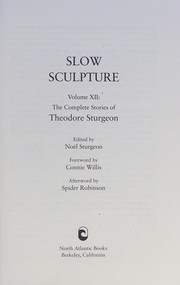
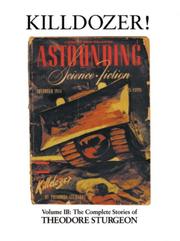
His award-winning output demonstrates both the breadth and consistency of his talent. Sturgeon claimed the Hugo Award for Best Novella in 1945 for “Killdozer!,” a masterfully tense story that transformed a simple premise—a bulldozer possessed by an alien intelligence—into a meditation on ambition and conflict. Decades later, near the end of his career, Sturgeon achieved the rare distinction of winning both the Nebula Award and the Hugo Award for the same work: “Slow Sculpture,” which earned the Nebula for Best Novelette in 1970 and the Hugo for Best Short Story in 1971. This dual recognition for a single story underscores both the quality of the work and Sturgeon’s enduring relevance to science fiction’s most discerning readers and peers, cementing his legacy as a writer whose imagination and craft continued to resonate across generations.