Vernor Vinge
Vernor Vinge stands as one of science fiction’s most visionary architects, a writer whose ideas often seem to arrive from the future itself. His career is marked by an extraordinary ability to extrapolate technological and social trends into narratives that feel simultaneously imaginative and inevitable. Whether exploring the concept of the Technological Singularity or depicting virtual reality decades before it became commonplace, Vinge brings rigorous scientific thinking to sweeping speculative premises. His work consistently interrogates what it means to be human in an age of accelerating change, asking profound questions about consciousness, intelligence, and the limits of understanding itself.
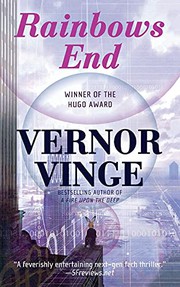
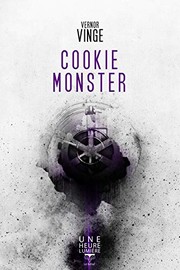
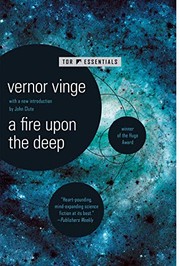
Vinge’s accolades reflect the deep resonance his fiction has found within the science fiction community. His novel A Fire Upon the Deep captured the 1993 Hugo Award, introducing readers to a cosmos divided into zones of space where the laws of physics themselves vary—a concept that became foundational to his universe-building. He returned to Hugo victory with A Deepness in the Sky, a prequel that expanded this vision while delivering a gripping tale of first contact and technological transformation. His later work continued to attract recognition, with Rainbows End securing both the 2007 Hugo Award for Best Novel and the Locus Award for Best Science Fiction Novel, cementing his status as a writer whose imaginative reach consistently achieves both critical acclaim and reader devotion. Along the way, his novellas—including Fast Times at Fairmont High and The Cookie Monster—demonstrated his mastery across formats, earning additional Hugo Awards that underscore his versatility.